Sunday, May 20, 2007

Get Rich or Die Tryin'

Gangsta rap is the most commercially lucrative subgenre of hip-hop.


If you listen to it, you’ll know it is populated with expletives, drug dealers turned emcees, the size of fly bling, rims, and booty in the strip club. The music seems to perpetuate a lifestyle denigrating women, homosexuals, whilst all the while advocating violence and self-destruction in pursuit of the almighty dollar bill.

Although, Snoop Dogg (and others) made a living from it since the 1980’s, it’s popularity really became commercially evident in the 1990’s, with the release of Dr. Dre's album, 'The Chronic' in 1992.

Criticism has come from both right wing and left wing commentators, religious leaders and black activists alike. In August 2006, civil rights activist -- the Rev. Al Sharpton warned of the dangers of doing nothing about the glorification of the gangster lifestyle.

Many people strongly believe, that Gangsta rap fosters criminal behavior amongst our ‘impressionable’ youth. Many have tried to quantify this tangible effect and though there have been varying results -- the majority lean with the argument that music (more so than television) has an effect on social behavior. (David Gordon, 2006)

There are many ethical issues at stake here. For instance, many Gangsta rappers often defend themselves by claiming they are only describing their reality of inner-city life, which leads me to question how they can justify making such vast amounts of personal profit from this exploitation. To what measure is it ethical and acceptable to profit from the plight of poor black conditions? The quandary deepens should it be proven that this behavior also inspires new and more illicit activity as well.


The rivalries between East and West Coast rap artists have led to countless deaths already. Two high profile rappers 2Pac Shakur and Biggie Smalls have already succumbed to their end in high profile drive by shootings. Record companies capitalized on the glorification of gang violence in rap music. These are people who can’t even defend themselves with the argument they are ‘describing the reality of their lives’.

The other day, we watched a snippet from “Born into Brothels’. We agreed it’s film-makers probably profited in some way or another, but at the end of the day there was not one person who accused it of encouraging inner-city depravation as we suspect Gangsta rap does.

Put that next to 'Get Rich or Die Tryin'; another film depicting inner city life loosely based on rapper 50 Cent’s gangland reality and violent experiences and you hear outrage.

To begin with, its movie poster shows 50 Cent (real name Curtis Jackson) with his arms outstretched, a microphone in one hand and a gun in the other. The poster was later ammended to calm criticism:


Later on, the DVD box looked like this:


Nevertheless, Jim Sheridan, who directed the film is an aclaimed director of ‘My Left Foot’ fame. Surely, he felt the project was worthwile.
In the movie, Jackson plays Marcus, a low level drug dealer turned rapper on the mean streets of New York. Tough is a big understatement when your father isn't around and your mom's busy pushing drugs. His rap dreams aren't solely based on fleeing his past.

It is a new perspective on Gangsta rap. In the movie, Marcus is given the opportunity and could use violence against those who want to mortally harm him, but instead opts for a more dangerous road; one that inolves using lyrics as verbal bullets to humiliate his foes. He famously walks on stage with a bullet proof vest. He's saying that if you live in the same conditions as he did, then you have braver more nobel means than violence at your disposal. It is the gangland's alternative to 'Kids with Camera's' solution.
In one scene, 50 Cent is shot nine times. He was shot nine times in real life too. Some say his album by the same name, ‘Get Rich or Die Tryin’, reveals the emotion that makes 50 Cent a powerful musical artist. The album was a huge commercial success, making him one our richest rappers!


However, When you choose to entertain with violent and sexist images, you run the risk of numbing kids (and adults too) to its effects. People consume this material very differently. An individual’s psyche may respond negatively to this type of stimulation. We can’t prevent kids from seeing this stuff and ‘misunderstanding’ its meaning and growing up to think it’s just ok to behave the same way. In the movie, Marcus himself comments that “Parents think you see nothing, but the truth is you see everything."
___________________________________________________

www.wl.k12.in.us/hs/clubs/scarlette/ jan27-06%5Cpage3Scarlette012706.pdf

Gordon, D. W. (2006, Nov) The Effect of Gangsta-Rap Radio on Urban Homicide Paper presented at the annual meeting of the American Society of Criminology (ASC), Los Angeles Convention Center, Los Angeles, CA . 2006-10-05 from http://www.allacademic.com/meta/p127575_index.html

Film: Get Rich or Die Tryin’ (2005)

Proof, BBQs, & Contacts, oh my!

As further proof that little eight-pound six-ounce baby jesus loves my final paper, the 400th episode of The Simpsons was based around the ramifications of an FCC over-reaction to an indecency complaint. Unlike the last eight years or so of The Simpsons, the 400th episode was actually kind of funny.

If any of you are so inclined to make it down to Menlo Park this next Saturday, Maggie and I are having a BBQ. Here's the info

Location: 445 Encinal Ave, Apt. N, Menlo Park, CA
View Map
When: Saturday, May 26, 6:30pm
Phone: 650-324-2953

Mat's Graduating!

Join us for a celebratory BBQ before Mat heads to LA!

6:30-whenever!

We'll have the hamburgers, hot dogs and some side dishes. It would be rad if you can bring beer (or other beverage of your choice), a side dish, or dessert.

If you're intrested in dropping by just let me know so we can make sure we have enough grub for everyone.


Lastly, if you guys are in L.A. in the future drop me a line. My permanent phone number is 917-940-2348 and matthewpatrick@gmail.com is the best way to get a hold of me.

It's been swell, y'all.
Matthew

Reason meets Desire

A lot of people question the ethics of selling consumers things they don't need. But what of our ethics in selling products known to be harmful too?

In 1996, the alcohol beverage industries self-imposed ban on broadcast advertisements by the major hard liquor distillers came to an end. Some federally licensed broadcast outlets chose to accept and air the ensuing advertisements for distilled liquor products but others refused preferring to only accept fermented alcohol products such as beer and wine.

The fact we even make a distinction between fermented beverage and distilled beverage is irrational. Beer is the drink of choice in most cases of heavy drinking, binge drinking, drunk driving and underage drinking. (Rogers and Greenfield, 1999). Nearly two out of every five Americans will be involved in an alcohol-related traffic crash in their lifetime. (Loyola University Chicago Health System: http://www.luhs.org/depts/injprev/Transprt/tran1-06.htm). So, if The Mothers Against Drunk Driving (MADD) don’t make this distinction, why are advertisers thinking it fit to do so?

Given the knowledge of alcohol consumption and its negative relationship upon overall health, shouldn’t alcohol (along with tobacco) advertising be barred from our airwaves? The fact remains that the scope and wide spectrum of alcohol use and abuse are so far ranging and complicated to categorize that the majority of reported alcohol-related DUI’s aren’t even perpetrated by alcohol abusers. (http://www.madd.org/stats/0,1056,1789,00.html) The Mothers Against Drunk Driving (MADD) would not see the difference.

Yet to achieve their sales agenda, alcohol marketers push positive messages about drinking and downplay and/or ignore negative consequences.

It is no doubt, a highly complicated ethical matter. A ban on the promotion of alcohol would be portrayed as forerunner to wider civil restrictions. Any state intervention in the communications between individuals and organizations will harm and raise questions over our civil liberties.

A spokesperson for the Distilled Spirits Council of the United States claimed that friends and family have more effect on a young person's decision to drink than advertisement.

Yet, what hope does a non-drinker have when all those around him are being seduced to buy and consume alcohol? It is clear the promotion of drinking to individuals will have an effect on others, so we cannot ignore the fact that the promotion through direct marketing will affect non-drinkers too.

As it stands, alcohol advertising should not be designed to appeal to people under the age of 21, for example, using cartoon characters as spokespeople is discouraged. Advertising cannot promote brands based on alcohol content or its effects. Advertising must not encourage irresponsible drinking.
The industry will use a reductio ad absurdum argument:

Father- Why were you drinking?
Son – Because all my friends were doing it.
Father- You're saying that if all your friends jumped off a cliff, you would do that too?

The alcohol industry has traditionally argued that drinking is a private pastime, in which people knowingly assume risks in return for pleasure. They say, that the purpose of advertising is to "encourage existing consumers to switch brands" and to "drink in moderation," From their point of view, even, this would not make good business sense. The alcohol industry needs replacement drinkers. It is obvious marketing seeks to retain drinkers and consolidate the market by promoting the pleasure to new drinkers coming of age.

Young people view nearly 2,000 are for beer and wine. For each anti-alcohol public service announcement teenagers are seeing twenty-five more advertisements enticing them to drink.
Whether or not the advertisements have any direct impact, according to the National Institute on Alcohol Abuse and Alcoholism there are:
• 1,400 deaths per year
• 500,000 injuries
• 600,000 assaults
• 70,000 sexual assaults
• Over 2 million drove a car in 2001 while under the influence


Conservatives such as Margret Thatcher have famously argued "there is no such thing as society, only individuals and families". But individuals and families constitute society. Every drinker has an impact on those around him.

Fortunately, alcohol advertising is one of the most highly regulated forms of marketing. So for instance, there are hundreds of beer commercials on air, but not one of them shows somebody actually drinking the beer.

In the United States, this sort of ‘restraint’ comes in the form self-regulatory bodies that make these "ethical" choices themselves, presumably to avoid federal government intrusion and regulation into their affairs that may lead to permanent legislation governing their advertising.

As if to add insult to injury; All but one complaint from the fourteen lodged by a panel of experts, were dismissed by advertising regulators nevertheless. Seven of those complaints never made it because this self-regulating body doesn’t count one-off promotions. (www.abc.net.au/pm/content/2006/s1656790.htm). Which leads us to question whether ethical responsibility are being met.

Friday, May 18, 2007

Get to Them By Making Them Come to You

Sneaky sounding title right? Well being sneaky is what this article is all about. I am referring to the trends that marketing agencies are starting in an attempt to get to consumers in today’s atmosphere of the internet, DVR, satellite radio and the many other facilities consumers have that allow them to avoid tried and true advertising techniques. The New York Times and The Washington Post have both run similar articles in the past few months regarding ad campaigns run by several large corporations that have focused on consumer created ads. Possibly the most famous of these was the Doritos’s ad campaign put together by Frito Lay during the run up to the Super Bowl. They held a contest for regular people to create 30 second commercials and posted the best 5 on their web site. They then directed people to their website through a number of means (I interestingly enough first found out about this campaign through an article in The New York Times Business section, nice job getting some free advertising Frito Lay) and let them view all five ads and vote for their favorite. The winner was to be aired during the Super Bowl, but I think I remember seeing more than one of the ads during the game.
This was an effective campaign for several reasons. First of all, I am still thinking about it and letting you folks know about it several months after the campaign began and they spent the $2.6 million per 30 second ad during the Super Bowl. (This seems like a good time to offer a link to their web site: http://www.doritos.com/). I also should let you know that I just went to their site to get that html address and was made aware of their new campaign to name a new flavor. Something that I am thinking I should go back and check out when I am done with this blog. Another reason this is a successful campaign is because they practically cut out their production costs. If regular people are making commercials for them and submitting them for air time for free Doritos only continues to save money. Finally, there is an argument to be made for the idea that the people who are creating these ads may better understand the Doritos demographic as they are probably a part of it themselves.
Another interesting attempt at dealing with commercial free competition comes to us from a Clear Channel radio station in Dallas, TX. They are starting a commercial free station that will have companies sponsor hours of broadcasting during which the DJ will incorporate their product into his regular on air talk. This will make up only two minutes of air time an hour, as opposed to the usual 12-16 minutes of air time that are normally devoted to commercials on regular commercial radio.
As an independent artist, this talk of marketing makes me once again ponder the notion of self marketing. While I agree that the internet and many other new technologies make it possible for independent artists to get themselves out into “the market”, whatever their market might be. However, it always seems to me that someone, or some large company is benefiting from your work and I have a hard time coming to terms with that. A perfect example of that is the My Space phenomena. I am often asked for “my my space” when I am out DJing and have gotten some really strong reactions from people when I tell them that I don’t have a My Space account. Just last week a woman huffed and walked away muttering something about “free marketing”. I can’t help but think that it is not totally free because from my understanding of My Space (limited no doubt) any time art work is posted on a my space page, the artist gives up some rights to My Space. Additionally, any time you are sending someone to a myspace, you are only directing eyeballs to their advertisers and at times I have trouble with that. Even though I know I do that every time I recommend a television show or any other medium that makes its money from advertising it seems different. Why? I’m not really sure. I think it has something to do with an overplayed sense of ownership and freedom that comes with things like my space. While I enjoy the opportunity that things like satellite radio offer the modern consumer in terms of personal choices and the ability to avoid commercialism I get nervous when I feel like people think they are getting more for free than they really are.


Hope I didn’t come off too angsty, still got a little 16 in me I guess.


Putting the I in Advertising - washingtonpost.com… http://www.washingtonpost.com/wp-dyn/content/article/2007/05/07/AR2007050700035_pf.html

In Dallas, Commercial Radio Without Commercials - New York Times… http://www.nytimes.com/2007/04/23/business/media/23radio.html?ex=1334980800&en=670c621f965488ef&ei=5089&partner=rssyahoo&emc=rss

Multiplying the Payoffs From a Super Bowl Spot - New York Times…
http://select.nytimes.com/gst/abstract.html?res=F70B15FF3C5B0C758EDDA80894DF404482&n=Top%2fNews%2fBusiness%2fSmall%20Business%2fMarketing%20and%20Advertising

General Discontent

For years now I have been watching as a seemingly endless parade of retired military officers appear on the cable news channels to explain why our military is so great, how we are doing such an excellent job in Afghanistan and Iraq, and how when our weapons work, you know the lines, surgical bombing, collateral damage, extraordinary rendition, all the usual military euphemisms. So it was refreshing to see General John Batiste appear in a TV commercial recently sponsored by a group called VoteVets.org, in which he scolds President Bush for his poor management of the War in Iraq. “Mr. President, you did not listen,” remarks the General.
“There was never enough. There was never a reserve,” he said. “Again and again, we had to move troops by as many as 200 miles out of our area of operations to support another sector. We would pull troops out of contact with the enemy and move them into contact with the enemy somewhere else. The minute we’d leave, the insurgents would pick up on that, and kill everybody who had been friendly.”

Wow!

Ouch!!

Now I am no fan of this war and occupation, but I do understand the need for a military, and I believe if you are going to do anything, do it right. It was bad enough to watch this nation led into war on bogus terms, and to discover that there were no weapons of mass destruction, but to have Generals who served in Iraq resigning from the military in protest for the way the “Commander in Chief” has been conducting the war, which is what General batiste has done, makes me wonder what is it going to take for some people to admit that President George W. Bush is an utter and complete failure.

Close your eyes, clinch your fists, and repeat, “stay the course, stay the course,
stay the course…”

Not to worry, there is a new plan, the “surge” will solve our problems.

This story gets better, because after the commercial with General Batiste aired, he was asked by CBS news, who employed him as a consultant, to step down from his position at CBS news. Linda Mason, a vice president at CBS news made a statement in which she said that when military officials are hired by CBS, they are expected to share their expertise with the CBS viewers, and that by appearing in an anti-Bush ad, viewers would get the feeling that everything he says would be anti-Bush. The General agreed to step down.

I don’t watch CBS news, but I do wonder if CBS news would ask a General that appeared in a commercial praising the ability of “Commander in Chief” George W. Bush to step down.

Oh well, this may be difficult for me to understand, but it is probably more difficult for the Republican Party, because General Batiste and VoteVets.org are campaigning in the districts of Republican Congressmen in hopes of getting them defeated.

Times must be tough for Republicans when even the military is opposed to their policies.


CBS Asks Batiste to step down
http://www.cbsnews.com/blogs/2007/05/11/publiceye/entry2791091.shtml

General Batiste speaks out
http://www.nytimes.com/2007/05/13/us/13generals.html?th&emc=th

Batiste fired
http://www.talkingpointsmemo.com/horsesmouth/2007/05/cbs.php

Thursday, May 17, 2007

Public trauma and the media

Columbine, 1999; September 11, 2001; Madrid, 2004; London (“7/7”), 2005; Virginia Tech, 2007. These five events, amongst many others, were tragedies, not only for survivors directly involved but for whole societies fearful for the implications such events might have on their own lives. In such instances, the media not only informs the public about what happens on the day but is also central in shaping the trajectory of the dealing of the event afterwards.
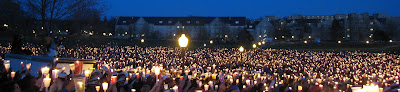
This is a moment in time in which the shocking events of April 16 – the shooting of 32 people, and the wounding of many more, at the Virginia Tech campus by student Seung-Hui Cho, who then committed suicide – are still being processed by the public. This, the deadliest shooting of its kind in modern US history, was followed by an outpouring of grief and sympathy nationwide. If public trauma can be defined as “a collective stress that occurs when members of a social system fail to receive the expected conditions of life from their social system due to external or internal sources” (Barton, 1970), then Virginia Tech was certainly that.

In “What Makes a Tragedy Public?”, Doka analyses further the factors that influence how important particular events come to be to the public. Scope, the number of victims, relief workers, and loved ones involved, is important. Equally influential is how closely the public identifies with the event and victims. Mass cult suicides are shocking partly because those involved are often ordinary people psychologically ensnared in sinister organizations; anybody could have been in their place. The social value of the victims also influences public attention. Students are likely to rank above elderly because of the social value attached to youth. Wider consequences are key. September 11 was so traumatic, not only because of the numbers of victims but also because of the potential implications for the security of people's own lives. The duration of the event is a complex factor; an ongoing affair can enable resource mobilization and allow the public to feel a sense of control or it can lead to a sense of powerlessness and eventually apathy. Whether or not the event was intended, or was an accident, can invoke public wrath and prejudice against a group to which the causer(s) belonged, if intention was involved, or produce sympathy towards victims in the tragedy was unforeseen. Linked to intention is preventability. High expectedness, for instance, can cause public anger. Lastly, the nature of the victims' suffering may influence public grief. Comfort may be taken knowing that victims died instantly and painlessly, horror may arise out of a long and painful episode ending in death.

Through this prism, the reaction to the Virginia Tech shooting can be more clearly understood. For a crime of this nature, the number of victims was wide in scope; most who were shot were students whose youth carries a high social value; the public was shocked by the wider implications of the event and the idea that their children in education, or even themselves, might be at risk; the shooting was intended (between shootings, Seung-Hui Cho even mailed footage and photos of the killings to NBC) in a way chilling to mass audiences; and the unimaginable suffering on the day was also horrific to contemplate.

These factors were ones produced on the day of the massacre and were influences that any media outlet reporting the basic facts had little influence over. More control by the media over public perception, however, is possible in the period immediately afterwards. The media is key in relaying the significance of an event. The extent of coverage, the type of footage used, the witnesses and spokespeople and who they represent, and the issues raised are all important in how the public perceives and processes tragedy.

In the aftermath of Virginia Tech, the nature of the media's coverage this time has sparked debate about what is ethically acceptable to report in the aftermath of such an event. Proportional to the perceived importance of the event, the media has covered many elements that might otherwise have been left unreported. The family of Seung-Hui Cho was interviewed, his sister saying “Our family is so very sorry for my brother's unspeakable actions. It is a terrible tragedy for all of us”. The mourning in Virginia was extensively covered. On April 20, the state of Virginia's observation of a day of mourning was reported. A moment of silence at noon was observed by students, staff, and visitors on campus, dressed in orange and maroon. Police investigations were detailed, specifically in relation to the disturbing behavior of the killer before the shootings and the attempts of the university faculty to encourage him to attend therapy. The names and stories of the victims were also detailed, providing an emotional connection to the human scale of the tragedy.

This detailed coverage was uncontroversial. Knowing the victims offered catharsis, the events of mourning enabled the public to share in the grief, police investigations enabled some closure and a sense of safety, and the killer's family's statements diffused potential animosity. All such stories were beneficial and a positive part of the media's role. More controversial, however, was the airing on April 18 of the “multimedia manifesto” sent to NBC by Seung-Hui Cho. Steve Capus, NBC news president, justified the release on the basis that the killer's motivation and mental condition were important facts for the public to know. But victims' families, police, and the American Psychiatric Association (APA) disagreed, the latter saying that such a release “seriously jeopardizes the public’s safety by potentially inciting 'copycat' suicides, homicides, and other incidents”.

The media regularly faces questions about whether to carry sensitive material, even if few instances are as dramatic as the Seung-Hui Cho multimedia manifesto example. Certainly, whether or not it is ethical to show the corpses of war victims has been an ongoing site of contention over the course of the Iraq war, with Al Jazeera television attracting significant criticism for showing such images. In few instances is it clear to discern motives on the part of outlets that carry difficult material. Such coverage can alarm and challenge viewers, awakening them to the reality and horror of a story and encouraging them to take it seriously and to ask important questions. Most commentators would agree that it is the role of the media to challenge and provoke. Agencies that seek to mute the shock of an event often do so for personal interests that conflict with the public's right to know.

But such worthy motives can be difficult to separate from the desire to make financial profit from attracting alarm, even if the public gains little from being shocked. Despite the many courtroom dramas following from Anna Nicole Smith's death, it is unclear how the grief of involved parties benefited viewers. And, as the APA noted above, sensitive material can be a safety risk to the public. Copycat killers, inspired by the dramatic movie-like material in the multimedia manifesto, are threats in the Virginia Tech case. In Iraq, authorities often express concern that insurgents will be inspired by successful terrorist acts depicted on the news and seek to repeat them.

Whilst such dangers are theoretically possible in every news story involving harm committed by one or more persons to another, one needs, to an extent, to accept that this is part of the territory of covering such stories. It is to be decided on the facts of every case whether the risk of copycat reprisals outweighs the need for the public to understand the true seriousness of an event. Also necessary for consideration is the potential slippery slope to widespread censorship that might result from stopping shocking images reaching the headlines. In Iraq, for example, to censor the depiction of any war corpses would set a dangerous precedent. If such censorship were acceptable in one case, would it not be acceptable in all?

References

Barton, P. (1970). Communities in disaster: A sociological analysis of collective stress situations. Garden City, NY: Doubleday.

Doka, J. (2003). What Makes a Tragedy Public? Retrieved May 17, 2007, from
http://www.hospicefoundation.org/teleconference/2003/doka4.asp.

'Campus killer's family 'so sorry''. Retrieved May 17, 2007, from http://news.bbc.co.uk/2/hi/americas/6578319.stm

'Virginia mourns massacre victims'. Retrieved May 17, 2007, from http://news.bbc.co.uk/2/hi/americas/6577095.stm

'Virginia shootings: The victims'. Retrieved May 17, 2007, from http://news.bbc.co.uk/2/hi/americas/6564075.stm

APA Urges Media to Stop Airing Graphic Cho Materials. Retrieved May 17, 2007, from http://www.psych.org/news_room/press_releases/07-25OpenLetteronChoMaterials.pdf

Wednesday, May 16, 2007

FLOWERS, BUNNIES, AND SUNSHINE!

Since September of 2001, there have been disturbing events occurring around the world. The most disturbing events in my opinion are the events that are happening to the rights of individuals in this country.

I am personally not paying enough attention to understand all the legal labyrinths that are being navigated In regards to the prisoners that have been being held at the Guantanamo Bay military detention center in Cuba, with terms like “enemy combatants,” and “extraordinary rendition,” but I do understand what it means when the US government announces that evidence will be allowed at tribunals that was obtained by torture.

The President of the United States has repeated a number of times that “we do not torture,” and in his new book, former CIA director George Tenet insists that “ we don’t torture,” while at the same time he has confirmed that in the period following September 11th, 2001, that he oversaw the use of morally questionable techniques of interrogation on terrorism suspects.

And as “Our Great Leader” George W. Bush is spreading freedom around the world, he seems to be spreading something else, and I don’t mean bushwa, (that is not a typo, look it up). As the US military was freeing the Iraqi people from the tyranny of Saddam Hussein, they were also rescuing them from the threat of torture at the hands of his regime, Shortly, and I mean very shortly, after we freed the Iraqi people and save them from torture at the hands of Saddam’s regime, the American people were shown the picture of American troops “abusing Iraqi detainees at Abu Ghraib, and the world is told that this was just the work of a few out of hand soldiers.

In a recent survey of US troops that served in the war zone of Iraq, 40% believed that torture is okay if it will same the life of a comrade. Shortly after these numbers were made public, General Petraeus wrote an open letter to his soldiers warning against the use of torture. I’m sure this made some people sleep easier at night, but probably not Iraqis.

At the time that the photos of detainee abuse at Abu Ghraib became public, I was attending college an innocently taking a course in Latin American history, while at the same time I was enrolled in a film history class. The Latin American history class was taught by a nice Argentinean man who regularly told jokes in Spanish, as a way of sort of bonding with the predominantly Spanish-speaking students. Toward the end of the semester we were studying Latin American history when the US was a major player in the politics of that region. Part of that history involves US backed military coups in Guatemala, Chile, and El Salvador, and one thing all these US backed military governments all had in common was the use of torture against their own populations. In the class we were reading about torture in Guatemala, disappeared citizens in Chile, and “death squads” in El Salvador. At the same time, our professor in the film history class had us watch “The Battle of Algiers,” which is a recreation of the fight in Algiers between the French Army, and Algerians who wanted to end the French occupation. This film has some really disturbing reenactments of the way that the French tortured the Algerians, to destroy their “terrorist network.” By the way, the French were eventually forced to leave.

So where am I going with all this?

I suppose I can say in summation that since September of 2001 I have watched as torture, which was before relegated to those regimes that the US has supported, Guatemala, El Salvador, Chile, Iraq, has made its way into mainstream American culture. My reaction to this is the same as my reaction was a couple of years ago when I was reading seemingly endless accounts of torture in Latin America, and the final for my film class was to watch and the write about a torture scene from “The Battle of Algiers,” I am in shock.

I want to end on a happy note, so…

FLOWERS, BUNNIES, AND SUNSHINE!


Evidence obtained using torture is admissible

http://writ.news.findlaw.com/scripts/printer_friendly.pl?page=/mariner/20070515.html

General Petraeus warns against torture

http://www.armytimes.com/news/2007/05/military_health_study_070504w/

Soldiers OK torture

http://www.armytimes.com/news/2007/05/military_health_study_070504w/

Tenet says, “We do not use torture”

http://niemanwatchdog.org/index.cfm?fuseaction=ask_this.view&askthisid=00277&stoplayout=true&print=true