The FCC (Federal Communications Commission) has a media consolidation review rule bill on their desks now. It all began in June of 2003 when the FCC passed changes granting more relaxed rules regarding media ownership. These rules were overturned a year later in 2004, but the rules are under revision currently. Senators Byron Dorgan and Trent Lott are working a bill to directly dealing with this issue (1). They would need to get this bill in before the December revision committees to halt any action by the FCC. FCC Chairman Kevin Martin has pushed for a timetable regarding this issue and it is now set for December 18th (2). The proposed changes would only allow big media companies to own even more media outlets in the same communities. We all know expansive the Clear Channel and Viacom empires have become. This new ruling would allow media conglomerates to own radio, TV, newspaper and cable TV stations in one area, essentially providing a monopoly on the media in the area (3). This could be argued that the big companies would have even more power to dictate culture, public opinion and even the course of political information. Is it ethical to have a few companies dictating our media? This is a question the BECA Department attempts to answer. Power. Money. Opinion. All these go into the decision.
FreePress states the myth of deregulation, “Relaxing or eliminating media ownership rules is characterized as ‘deregulation” (3). “The implication is that the choice is between government regulation or free market regulation, based upon competition” (3). In truth, this practice leads to less competition as argued by Robert McChesney. “In some respects, the global media market more closely resembles a cartel than it does the competitive marketplace found in economic textbooks” (4). McChesney mainly concentrates on the global market being controlled by 7 huge corporations. His writing does explore the problems indicative of the United States media market. His argument is perfectly in tune with his title, rich media make for poor democracies. His argument against deregulation is strong. Can market forces control media? He states that deregulation causes less competition and more concentration within local markets. He gives the example of the consequences of the 1996 Telecommunications Act. Clear Channel became a very powerful entity with no competition after this ‘deregulation.’
Compaine on the other hand believes that ‘a few big companies’ are not taking over the media. He also concludes that U.S. companies don’t dominate the global media, that corporate ownership is not killing hard-hitting journalism and that global media does not drown out local content (5). Compaine believes with the history of takeovers, mergers, and acquisitions hinder big companies from taking over a majority of the market. He gives an example of Clear Channel buying up local stations but making sure that local flavor is always aired to continue interest in local music.
So, do big companies like Clear Channel, clearly the company with the biggest advantage after the 1996 Telecomm Act, shrink playlists, recycle same material and ruin the democracy of radio? It can be argued yes, but as always there is a different side.
These new regulation rules will only further the control of the same companies that benefited from the 96 Act. Less government intervention and policing on ownership will only allow big companies to edge out the little local guys. The color or the "Americana" that is signified by the mom/pop joints from Route 66 to the local public access and radio stations that give us 'objective programming.' I use this term loosely.
FreePress.net is urging citizens to get involved by demanding that the FCC listen to citizens and hold official hearings in people’s respective states. If this happens, people need to involve themselves and make their opinion known. Whether they are for further deregulation or for making the rules stricter, make this known to the FCC. The FCC falls victim to public relations nightmares, political red tape and non-objective bias, but with more information and public opinion, the best decision can be made.
Regulators need to hear on clear message: Protect what we have and make sure we can democratically build on it. The PUBLIC media needs to remain so. Public media is part of the public sphere that should be considered everyone’s property and everyone’s decision should matter how it evolves.
(1) http://www.broadcastingcable.com/article/CA6492609.html
(2) http://www.broadcastingcable.com/article/CA6492368.html
(3) http://www.freepress.net/rules/page.php?n=fcc
(4) McChesney, R. Rich Media, Poor Democracy: Communication Politics in Dubious Times. University of Illinois Press. 1999.
(5) Compaine, B. Global Media. Foreign Policy, November/December 2002.
(6) A link to the 2003 ruling. http://www.poynter.org/column.asp?id=56&aid=36005
(7)
Saturday, October 20, 2007

Friday, September 28, 2007
Billboards and TV take away civil liberties
As I was listening to NPR the other night, an interesting tidbit came on the radio; “Billboards in Bogota, Columbia will not only have advertisements, but will start posting photos and names of known sex offenders” (NPR, Wednesday September 26th, 2007). Bogota is a city of 7 million people (1) with 17,000 reported cases of sexual abuse to minors last year alone (2). The City Council in Bogota approved this measure earlier in the year hoping to protect citizens from sexual predators. Councilwoman Gilma Jimenez stated that over 200,000 kids a year are sexually abused with only a small amount being investigated (1). This is where the numbers get confusing, but think about the 17,000 reported in other article. The billboards will give the sex offender’s names, their photo, the men’s crimes and the age of their victim. 40 billboards will go up around the city located on highways and busy roadways (3). Recently, the consequence sof sexual predation have become more strict as the government raised punishment from 12 years to 25 years. This was only the start. This new law also calls for the prisoners images to be broadcast on television. Obviously, the prisoner’s lawyers are having a field day with the possibility of violation of the men’s constitutional rights.
Proponents say this will help the society, while adversaries say this is social injustice.
Should sexual offenders be ‘victimized’ or given additional punishment after their jail sentence?
In the United States two recent laws have been passed. California recently passed Jessica’s Law, which prevents sexual offenders from living within 2,000 feet of schools, parks or beaches. Furthermore, Megan’s Law was passed to allow communities to be able to access a database via the Internet that informs the public of the whereabouts of sexual offenders in their community (4). I briefly looked up my community. In my county alone, there are 1635 registrants with 1,169 known addresses of sexual offenders. In my zip code there are 75 registrants with 51 full addresses. The first law has been debated as unconstitutional due to its retroactive actions regarding previous offenders. The latter law has been accepted and widely used among families with young children.
The state of Iowa Supreme Court recently deemed the former law unconstitutional due to its retroactive nature (5). The news editorial this originates argues that sexual offenders have civil liberties also. It begs the question, ‘If they have served their jail time, do they deserve to be continually punished upon release from their incarceration?’ It recognizes the law as ‘commendable’ for its task of protecting the children, but also recognizes that it’s the government’s job to protect the citizens. The editorial continues on stating that as long as other sentences withstand constitutional scrutiny, they should or could be utilized. I agree with this editorial even with my own prejudices against these types of criminals. One must empathize with these offenders, they have served their initial jail time, should they be hounded and punished further?
In the United States, ankle bracelets and close scrutiny of parole officers have been utilized as post-jail treatments, along with registering with the local law enforcement. So far, this process seems sufficient or at the least adequate. Bogota’s newspapers and other organizations are calling for similar actions to be taken in the capital. Their stance against the billboards recognized the civil liberties of the prisoners. The latest news involves prisoners staging peaceful protests against this new law in Bogota (2).
Does this law in Columbia give due process? Does it allow the prisoner’s their constitutional rights after release from prison? One must recognize that people go to prison to ‘heal.’ Prison is not only a punishment, but a place to, theoretically, heal a prisoner so that they can function in society again.
Should media be used to ‘educate or inform’ the public about local deviants? I believe accessing the whereabouts of sexual predators via the Internet is powerful and informative. Beyond this, how does the government stay involved, but respect civil liberties. The government can’t follow these offenders everyday making sure that their walks, drives or transports don’t take them near schools, beaches, parks or the like. We must trust in the ‘reform’ system of the jails to ‘heal’ these offenders. These offenders lose so much going to prison and afterwards, we, or the Columbians should not enact retroactive laws for previous offenders. I also believe that pasting the photos of these offenders puts the power of regulation in the hands of gangs, irate citizens and anyone seeking revenge or action against the offenders. Public knowledge should be granted, but it should be accessed, not pushed onto the general public. The television spots and the billboards push these offender’s discrepancies onto the public, which could incite more violence and retribution. The media in Columbia should stay neutral and not allow the government to regulate or dictate what is aired via its outlets.
The media should be utilized to educate and inform, but the government’s blatant disregard to citizen’s well-being is being overshadowed in this instance. These pictures and information will reach the masses and when the masses are given power, that power is easily corruptible. I hope that the prisoners do not see retribution taken against them by gangs or fellow citizens.
1. http://www.thestar.co.za/index.php?fArticleId=4054924
2. http://www.iol.za.org/index.php?set_id=1&click_id=122&art_id=nw20070509221120165C420017
3. http://news.bbc.co.uk/1/hi/world/americas/7015707.stm
4. http://www.meganslaw.ca.gov/homepage.aspx?lang=ENGLISH
5. http://media.www.iowastatedaily.com/media/storage/paper818/news/2004/02/16/Opinion/Editorial.Sex.Offenders.Have.Civil.Liberties.Too-1098792.shtml
NPR radio
Proponents say this will help the society, while adversaries say this is social injustice.
Should sexual offenders be ‘victimized’ or given additional punishment after their jail sentence?
In the United States two recent laws have been passed. California recently passed Jessica’s Law, which prevents sexual offenders from living within 2,000 feet of schools, parks or beaches. Furthermore, Megan’s Law was passed to allow communities to be able to access a database via the Internet that informs the public of the whereabouts of sexual offenders in their community (4). I briefly looked up my community. In my county alone, there are 1635 registrants with 1,169 known addresses of sexual offenders. In my zip code there are 75 registrants with 51 full addresses. The first law has been debated as unconstitutional due to its retroactive actions regarding previous offenders. The latter law has been accepted and widely used among families with young children.
The state of Iowa Supreme Court recently deemed the former law unconstitutional due to its retroactive nature (5). The news editorial this originates argues that sexual offenders have civil liberties also. It begs the question, ‘If they have served their jail time, do they deserve to be continually punished upon release from their incarceration?’ It recognizes the law as ‘commendable’ for its task of protecting the children, but also recognizes that it’s the government’s job to protect the citizens. The editorial continues on stating that as long as other sentences withstand constitutional scrutiny, they should or could be utilized. I agree with this editorial even with my own prejudices against these types of criminals. One must empathize with these offenders, they have served their initial jail time, should they be hounded and punished further?
In the United States, ankle bracelets and close scrutiny of parole officers have been utilized as post-jail treatments, along with registering with the local law enforcement. So far, this process seems sufficient or at the least adequate. Bogota’s newspapers and other organizations are calling for similar actions to be taken in the capital. Their stance against the billboards recognized the civil liberties of the prisoners. The latest news involves prisoners staging peaceful protests against this new law in Bogota (2).
Does this law in Columbia give due process? Does it allow the prisoner’s their constitutional rights after release from prison? One must recognize that people go to prison to ‘heal.’ Prison is not only a punishment, but a place to, theoretically, heal a prisoner so that they can function in society again.
Should media be used to ‘educate or inform’ the public about local deviants? I believe accessing the whereabouts of sexual predators via the Internet is powerful and informative. Beyond this, how does the government stay involved, but respect civil liberties. The government can’t follow these offenders everyday making sure that their walks, drives or transports don’t take them near schools, beaches, parks or the like. We must trust in the ‘reform’ system of the jails to ‘heal’ these offenders. These offenders lose so much going to prison and afterwards, we, or the Columbians should not enact retroactive laws for previous offenders. I also believe that pasting the photos of these offenders puts the power of regulation in the hands of gangs, irate citizens and anyone seeking revenge or action against the offenders. Public knowledge should be granted, but it should be accessed, not pushed onto the general public. The television spots and the billboards push these offender’s discrepancies onto the public, which could incite more violence and retribution. The media in Columbia should stay neutral and not allow the government to regulate or dictate what is aired via its outlets.
The media should be utilized to educate and inform, but the government’s blatant disregard to citizen’s well-being is being overshadowed in this instance. These pictures and information will reach the masses and when the masses are given power, that power is easily corruptible. I hope that the prisoners do not see retribution taken against them by gangs or fellow citizens.
1. http://www.thestar.co.za/index.php?fArticleId=4054924
2. http://www.iol.za.org/index.php?set_id=1&click_id=122&art_id=nw20070509221120165C420017
3. http://news.bbc.co.uk/1/hi/world/americas/7015707.stm
4. http://www.meganslaw.ca.gov/homepage.aspx?lang=ENGLISH
5. http://media.www.iowastatedaily.com/media/storage/paper818/news/2004/02/16/Opinion/Editorial.Sex.Offenders.Have.Civil.Liberties.Too-1098792.shtml
NPR radio
Sunday, September 23, 2007
Free Speech or F*** Speech
Controversy? Read on and contemplate.
Socrates fought for it during his trial in Athens. The Magna Carta was signed to promote it in England. Milton published ‘Areopagitica’ to argue restriction against it. The First Amendment guarantees it.
Free Speech. Simply put this could be the greatest power we as Americans, humans and citizens of the world have in our arsenal. What happens when this power is lost? What happens when our civil liberties are taken away?
This past week, a University of Florida student attended Senator John Kerry’s forum. Kerry spoke and afterwards took questions from the audience. During the questioning period, Andrew Meyer, the UF student, got up and asked a few questions. Some of the questions Meyer asked include; “What do you think about voter suppression in the 2004 Presidential race?” “Why didn’t you appeal the 2004 Presidential vote count?” “Were you a member of the Skull and Bones fraternity with President George W. Bush?” “Why hasn’t a move been made to impeach Bush?” The microphone Meyer was using cutoff and police officers came to escort him out of the forum. After raising his voice and having several police officers grabbing him, Meyer was tased. Please see video, http://www.youtube.com/watch?v=tCBcOQkUNjI
http://www.youtube.com/watch?v=iqAVvlyVbag
Both of these videos give two different views of the incident. Obviously some students agreed with this gentleman’s questions and rational, and others disagreed; proven by their clapping at his being escorted out of the forum. The student was subsequently arrested, jailed overnight and charged with resisting arrest and disturbing the peace.
These are great, interesting, valid, depth-seeking questions. They are also controversial, or can be seen as controversial by many people. Kerry even acknowledged the questions and began answering the questions as the student was being tasered in the back of the auditorium. This, in my opinion, only recognizes these questions as valid and not a distraction.
No matter the background of this student, which has come into questions, a bigger issue of civil liberties becomes present.
In response to this occurrence, students on university campuses across the nation have been reacting. In a column in Colorado State University’s paper, The Collegian, students reacted with differing opinions, (http://www.collegian.com/home/index.cfm?event=displayArticlePrinterFriendly&uStory_id=69ff4709-2ad4-4309-845f-5ebc419b240f).
Then, on Friday September 21, the editorial page of the same paper had a heading with the following, ‘Taser This… F*** Bush’. It spoke about the loss of civil liberties and the right to free speech. The editor did not publish this account maliciously, but instead in an action to incite opinions and conversations about free speech. Now, the editor is embroiled in controversy with the CSU presidential office. The paper has lost $30,000 in advertising money along with putting McSwane’s job on the line.
The editor has written a response to this uproar and the CSU president’s reaction (4). He did this by writing a controversial heading. This challenges our ethos. It challenges the daily standard. This challenges the traditional sense of newspaper reportage. It has been looked at with mixed emotions also.
“The editorial was bound to raise hackles, said Bob Steele of the Poynter Institute, a school for journalists, who advises newspapers on ethical issues. The best of editorials are evocative and provocative, but shocking readers in itself is not necessarily good journalism, nor is the use of shock-therapy editorial language the wisest expression of free speech." (http://www.denverpost.com/ci_6972545?source=rss).
Free speech is the only way how reporters, and us as citizens can agree, disagree, fight and challenge the government, authorities, and anyone’s opinions. Free speech is a healthy expression for us and essential to the media, especially media considering themselves public service media.
I digress, in free speech incidents closer to this area, one can look at what was happening to the University of California-Berkeley in the 1960s. Students became embroiled in controversy there over the subject of a park – People’s Park – and how the situation was being handled amongst the University administration and the student body. Residents of San Francisco fight for free speech everyday. This past spring, citizens performed a ‘die-in’ in the streets of downtown San Francisco. This demonstration was met with mixed reviews, with several citizens being arrested because of blocking traffic and disturbing the peace.
Now, did cops take away the civil liberties of this student at John Kerry’s forum? Did the editor of The Collegian act irrationally and with malcontent when publishing his editorial page in response to the tasering incident? The latter question is easier to answer. Obviously, the editor was not out to maliciously hurt George W. Bush, I have seen transients and panhandlers with more appropriate cardboard signs for this justification. I do believe that the strong language utilized by McSwane’s editorial page was a bit off the mark. One can incite conversation and inform the public without startling them to the point of irrationality. Some strategic asterisks or cartoons can be used instead of printing a word that has become taboo in our society. (http://www.the-two-malcontents.com/2007/09/22/colorado-state-university-student-newspaper-under-fire-for-taser-thisfuck-bush-editorial/).
Now, an alternative of challenging free speech with telling Bush off, would be to produce a story directly involved and in response to the tasing of Meyer the UF student. Why not print a story with the headline, “Tase this…F*** the tasing cops!” Wouldn’t that have hit home a bit more than to attack Bush? Don’t get me wrong, I am not protecting Bush, I am sure I have been known to join the choir in doing some Bush-bashing, but the larger picture here is free speech and civil liberty suppression regarding a law enforcement act against a citizen at a public forum.
Backtracking to the civil liberty in question to UF student Meyer. If after watching the videos of Meyer, you feel that cops used excessive force and were wrong in escorting Meyer out, then my guess is you feel that his civil liberties were taken away. On the other hand, if you feel that he was being disruptive in public and being a nuisance to his fellow citizens, then the cops were acting accordingly.
Personally, I think Meyer went to far when wasn’t concise and direct with his questioning. His postulating was too much. Furthermore his mentioning of Clinton’s fellatio incident was not suited and not relevant to what he was intending to get answered.
Meyer could have made a better point if he asked his specific questions quickly, directly and then held up a sign that stated his beliefs. (just an idea)
In saying that, I also think that the cops using tasers on the student were misdirected. With 4 or more police officers around him, my question is why couldn’t they cuff him and lead him out without using excessive force.
http://www.msnbc.msn.com/id/20835952/
http://civilliberty.about.com/od/lawenforcementterrorism/p/kerry_taser.htm
http://www.foxnews.com/story/0,2933,297126,00.html
http://www.youtube.com/watch?v=tCBcOQkUNjI
http://media.www.collegian.com/media/storage/paper864/news/2007/09/21/News/Taser.Incident.Ignites.Debate-2983312.shtml
http://www.denverpost.com/ci_6972545?source=rss
http://www.collegian.com/home/index.cfm?event=displayArticlePrinterFriendly&uStory_id=69ff4709-2ad4-4309-845f-5ebc419b240f
http://media.www.collegian.com/media/storage/paper864/news/2007/09/21/News/Letter.From.Collegian.Editor.In.Chief.Regarding.Bush.Statement-2984663.shtml
Socrates fought for it during his trial in Athens. The Magna Carta was signed to promote it in England. Milton published ‘Areopagitica’ to argue restriction against it. The First Amendment guarantees it.
Free Speech. Simply put this could be the greatest power we as Americans, humans and citizens of the world have in our arsenal. What happens when this power is lost? What happens when our civil liberties are taken away?
This past week, a University of Florida student attended Senator John Kerry’s forum. Kerry spoke and afterwards took questions from the audience. During the questioning period, Andrew Meyer, the UF student, got up and asked a few questions. Some of the questions Meyer asked include; “What do you think about voter suppression in the 2004 Presidential race?” “Why didn’t you appeal the 2004 Presidential vote count?” “Were you a member of the Skull and Bones fraternity with President George W. Bush?” “Why hasn’t a move been made to impeach Bush?” The microphone Meyer was using cutoff and police officers came to escort him out of the forum. After raising his voice and having several police officers grabbing him, Meyer was tased. Please see video, http://www.youtube.com/watch?v=tCBcOQkUNjI
http://www.youtube.com/watch?v=iqAVvlyVbag
Both of these videos give two different views of the incident. Obviously some students agreed with this gentleman’s questions and rational, and others disagreed; proven by their clapping at his being escorted out of the forum. The student was subsequently arrested, jailed overnight and charged with resisting arrest and disturbing the peace.
These are great, interesting, valid, depth-seeking questions. They are also controversial, or can be seen as controversial by many people. Kerry even acknowledged the questions and began answering the questions as the student was being tasered in the back of the auditorium. This, in my opinion, only recognizes these questions as valid and not a distraction.
No matter the background of this student, which has come into questions, a bigger issue of civil liberties becomes present.
In response to this occurrence, students on university campuses across the nation have been reacting. In a column in Colorado State University’s paper, The Collegian, students reacted with differing opinions, (http://www.collegian.com/home/index.cfm?event=displayArticlePrinterFriendly&uStory_id=69ff4709-2ad4-4309-845f-5ebc419b240f).
Then, on Friday September 21, the editorial page of the same paper had a heading with the following, ‘Taser This… F*** Bush’. It spoke about the loss of civil liberties and the right to free speech. The editor did not publish this account maliciously, but instead in an action to incite opinions and conversations about free speech. Now, the editor is embroiled in controversy with the CSU presidential office. The paper has lost $30,000 in advertising money along with putting McSwane’s job on the line.
The editor has written a response to this uproar and the CSU president’s reaction (4). He did this by writing a controversial heading. This challenges our ethos. It challenges the daily standard. This challenges the traditional sense of newspaper reportage. It has been looked at with mixed emotions also.
“The editorial was bound to raise hackles, said Bob Steele of the Poynter Institute, a school for journalists, who advises newspapers on ethical issues. The best of editorials are evocative and provocative, but shocking readers in itself is not necessarily good journalism, nor is the use of shock-therapy editorial language the wisest expression of free speech." (http://www.denverpost.com/ci_6972545?source=rss).
Free speech is the only way how reporters, and us as citizens can agree, disagree, fight and challenge the government, authorities, and anyone’s opinions. Free speech is a healthy expression for us and essential to the media, especially media considering themselves public service media.
I digress, in free speech incidents closer to this area, one can look at what was happening to the University of California-Berkeley in the 1960s. Students became embroiled in controversy there over the subject of a park – People’s Park – and how the situation was being handled amongst the University administration and the student body. Residents of San Francisco fight for free speech everyday. This past spring, citizens performed a ‘die-in’ in the streets of downtown San Francisco. This demonstration was met with mixed reviews, with several citizens being arrested because of blocking traffic and disturbing the peace.
Now, did cops take away the civil liberties of this student at John Kerry’s forum? Did the editor of The Collegian act irrationally and with malcontent when publishing his editorial page in response to the tasering incident? The latter question is easier to answer. Obviously, the editor was not out to maliciously hurt George W. Bush, I have seen transients and panhandlers with more appropriate cardboard signs for this justification. I do believe that the strong language utilized by McSwane’s editorial page was a bit off the mark. One can incite conversation and inform the public without startling them to the point of irrationality. Some strategic asterisks or cartoons can be used instead of printing a word that has become taboo in our society. (http://www.the-two-malcontents.com/2007/09/22/colorado-state-university-student-newspaper-under-fire-for-taser-thisfuck-bush-editorial/).
Now, an alternative of challenging free speech with telling Bush off, would be to produce a story directly involved and in response to the tasing of Meyer the UF student. Why not print a story with the headline, “Tase this…F*** the tasing cops!” Wouldn’t that have hit home a bit more than to attack Bush? Don’t get me wrong, I am not protecting Bush, I am sure I have been known to join the choir in doing some Bush-bashing, but the larger picture here is free speech and civil liberty suppression regarding a law enforcement act against a citizen at a public forum.
Backtracking to the civil liberty in question to UF student Meyer. If after watching the videos of Meyer, you feel that cops used excessive force and were wrong in escorting Meyer out, then my guess is you feel that his civil liberties were taken away. On the other hand, if you feel that he was being disruptive in public and being a nuisance to his fellow citizens, then the cops were acting accordingly.
Personally, I think Meyer went to far when wasn’t concise and direct with his questioning. His postulating was too much. Furthermore his mentioning of Clinton’s fellatio incident was not suited and not relevant to what he was intending to get answered.
Meyer could have made a better point if he asked his specific questions quickly, directly and then held up a sign that stated his beliefs. (just an idea)
In saying that, I also think that the cops using tasers on the student were misdirected. With 4 or more police officers around him, my question is why couldn’t they cuff him and lead him out without using excessive force.
http://www.msnbc.msn.com/id/20835952/
http://civilliberty.about.com/od/lawenforcementterrorism/p/kerry_taser.htm
http://www.foxnews.com/story/0,2933,297126,00.html
http://www.youtube.com/watch?v=tCBcOQkUNjI
http://media.www.collegian.com/media/storage/paper864/news/2007/09/21/News/Taser.Incident.Ignites.Debate-2983312.shtml
http://www.denverpost.com/ci_6972545?source=rss
http://www.collegian.com/home/index.cfm?event=displayArticlePrinterFriendly&uStory_id=69ff4709-2ad4-4309-845f-5ebc419b240f
http://media.www.collegian.com/media/storage/paper864/news/2007/09/21/News/Letter.From.Collegian.Editor.In.Chief.Regarding.Bush.Statement-2984663.shtml
Friday, September 21, 2007
Slippery Ethics Issues - Open Ended Response
Ken Burns recently produced a $13 million, 7 part, 15 hour, and epic documentary on WWII. The series will start airing on PBS, especially our local KQED station this Sunday night. Burns’ rushed to tell this story, as 1,000 WWII veterans are dying a day. (1) This urgency was one of the leading reasons Burns felt this story needed to be told. Burns’ always intimate, personal stories are successful because they tell a big story with a lot of heart, and endearment. Even with Burns’ mentioning he did not intend to make an all-inclusive story, he is being met with resistance to his film (3). Burns’ retroactively co-produced with Hector Gallan, a prominent Latino filmmaker, 30 minutes of extra footage concentrating on the Latino contributions and achievements during WWII. Latinos initially contacted Burns sponsors, PBS, and through legislation insisting on their addition to ‘The War’ (4). Latinos are planning protests outside of 4 PBS stations in California on Sunday and further protests will happen in Washington D.C. and Boston. These issues was discussed this morning on Forum with Michael Krasny, with substitute hose Dave Iverson. The questions posed in the show are the same thoughts I had during Burns’ speeches at his premiere, and at SFSU campus on September 14th. This will be discussed after some background (5).
As pervious WWII films have concentrated on strategy, commander’s opinions and heroes, Burns’ story focusing on the stories he does best, personal stories. (1). Young viewers, whose previous knowledge of WWII undoubtedly come from sources such as Band of Brothers, Saving Private Ryan, Flags of our Fathers, and other dramatic representations of ‘the greatest war,’ will be able to find truth, heart, vital information and a true educational experience in watching the war. Burns’ The War is an aural assault but could possibly be his greatest achievement (2). The movie’s graphic scenes are intense scenes to digest, but all a part of the necessary story. “‘The War’ invigorates history – in an honest fashion” (2). Burns has always been a historical buff with a creative streak enabling him to tell epic stories such as Jazz, Baseball, Unforgivable Blackness, The Rise and Fall of Jack Johnson, Mark Twain, Civil War, The West and more (6). Burns is an artist, a documentarian, and a mainstay of Public Broadcasting for over 20 years. Not many people would say that Burns is a racist, biased, individual, but one cannot deny that themes of race and discrimination permeate his productions (6, Charlie McCollum). Viewers can take a look at the story of Jack Johnson, an African American boxer that was given little chance at professional boxing because of his race. Now, historically he is revered as one of the best boxers of all time. ‘Baseball’ touched upon the discrimination issues during the 1900s, ‘Jazz’ explored racial profiling, and now ‘The War’ not only discusses how diversity was huge in California after the war, but has now been amended to include the Latino contribution to WWII.
On NPR’s Forum with guest host Dave Iverson, guests Armando Rendon, the chair of the Northern California Defend the Honor Campaign, Hector Gallan, producer and filmmaker, Charlie McCollum San Jose Mercury journalist, and Linda O Bryan, Northern California PBS management, all discussed the Burns’ issue of initially excluding Latinos from ‘The War.” Burns declined his invitation to speak with the program, and I recognize his withdrawal from this issue as he has been dealing with it for over a year now.
Prior to discussing the Forum radio show, viewers need to know a few things.
1. Burns did not intend to make an all-inclusive documentary. 2. ‘The War’ was done for over a year when Burns was contacted by PBS national and his sponsors about including Latinos in his series. Burns amended his film by adding 30 minutes of footage at the end of episodes 1, 5, and 6. I was lucky enough to see the premier of episode 1 at the Letterman Digital Arts Center in the Presidio. 3. As a documentarian, Burns does not have to be objective like a journalist, his art is important, but as a documentarian, he has to recognize that there may be a bigger story. 4. The Hispanic Caucus used leverage in legislation to get recognition for this issue. As of present, I do not have information regarding what sort of conversations between any legislators and the national PBS offices have had in the past concerning this issue. 5. Protests being held in California and other PBS affiliates, a comic strip are being utilized to express Latino influence during WWII and take a stance of education on this issue (4). 6. PBS, especially KQED have now produced a series of Latino involvement in WWII that will air after ‘The War.’ They will also be continuing to produce radio, TV and Internet documentation to archive the contributions of Latinos in WWII. This is in direct response to Defend the Honor Campaign and other protests against what has happened.
The questions posed on Forum, and ones that I have been thinking about were these:
What are the dangers of interests groups changing an artist’s vision?
Should legislation get involved when it comes to Public Broadcasting and equal rights?
The guests on forum expressed the following thoughts:
Armando Rendon, chair of the Northern California Defend the Honor Campaign (5)
He is still concerned that Burns failed to recognize Latinos in WWII contributions. He wants to question not only the integrity of Burns’ filmmaking but all filmmakers. He wants to remind people that you can’t ignore the Latino history. Rendon recognized Burns’ wanted to celebrate American’s diversity with this film, but in order to do that, he wants to include the Latino population. Rendon has states that PBS has a tremendous responsibility to be diverse and they dropped the ball with Ken Burns. Rendon believes if any precedence is being set here, it is that people are independently editorializes their artwork.
Hector Galan, an independent documentary filmmaker and co-producer of ‘The War’ and its portrayal of Latinos expounded the following: (5)
As an artist, he stated that he would not want to be part of what Ken Burns is having to go through. He feels the series is great. It is filled with Latinos images, but we do not hear their voices. He even recognized his father on a ship. He recognizes that Ken Burns did not purposely exclude Latinos, but he feels that Latinos are off the radar for people on the East Coast including PBS. He equates this with why Latinos were added initially. Galan enjoyed working with Burns on the amended pieces and feels the quality of the footage was parallel to the previous footage. Still not 100% satisfied because it is still an add-on or appendage. The show ‘ends’ or fades to black and then the addition comes on screen. Afterward credits roll. Galan feels this situation sets precedence because it defends the honor of Latino filmmakers. He did not have a true opinion on how do you, as an artist; respond to the pressure from interest groups on your sponsors. He does feel that with Ken Burns’s success, that he should be more conscious of opening up his vision. Although he didn’t intend this to be a definitive piece, the story arcs cover many grounds and added another 30 minutes was needed. (5)
Reporter Charlie McCollum had the following to say: (5)
He feels that this incident sets a precedent for interest groups and their rights. He recognizes that the voices of Hispanics are simply not heard, but he worries about the pressure put upon filmmakers. McCollum states that documentarians are not journalists, they are artists that have visions and want to tell stories. (5)
Linda O Bryan, CPB management had the following to say: (5)
This situation has created a debate that needed to be discussed, but worries about the precedent it is setting due to the political issues that may arise. How is this going to deal with Public Broadcasting legislation? She does not know what sort of ‘creative freedoms’ will be compromised with such a precedent of change. KQED’s goal and PBS’ is to stay independent, diverse and produce quality programming. KQED will continue producing material that concentrates on Latino and Asian contributions to the war while archiving all this information on the Web and on Radio. (5)
I have personally seen the first episode and seen Burns speak about his series, his goals and respond to criticism, I commend him for his integrity to make the film, which is possibly the greatest film he has produced, and I commend him for co-producing the extra footage and adding it onto his current film. I understand that he took a lot of pressure from interests groups, national PBS, and the general public to amend his work. He did it in the best way he saw possible, by adding the footage on, without destroying the integrity of the piece he has already produced.
My own personal thoughts are that no legislation or interest groups rights should hinder, manipulate, change, or amend an artist’s vision on his/her project. I do recognize from past experiences working with public broadcasting, that certain criteria need to be followed and certain goals need to be met. From personal experience I have been part of producing series that fed to the masses, and targeting the general public without being perceived as discriminatory. I have had to change piece of a show due to graphic and or critical footage, but I understood the rational behind changing the piece. That situation differed from Burns’s situation. I believe PBS folded in its integrity on this issue. Essentially making Ken Burns add footage and story to his film to diversify the message amends their own independent mindset. I agree with the stations producing their own material in addition to showing Burns’ piece. KQED is producing ‘Soldados,’ ‘Nisei Soldiers’ and ‘The War: Bay Area Stories.’ (2) All these can be perceived as supplemental material to Burns’ piece, but also in response to the Latino protests regarding their exclusion from Burns’ piece. Burns set out to make a story of four towns and their relation to the War and the families in those towns. He did not set out to make a piece about difference races’ involvement with the War. That is a completely different story.
Interests groups have a right to their opinion; they are a strong, integral part of this society’s masses. Their responses of protests and demonstrations are understandable, but I believe there are more constructive ways to getting their message across. The cartoonist expressing his feelings behind his cartoon, Galan producing Latino pieces form Texas, and the possibility of making their own Latino WWII pieces are all great ideas and financially viable productive and constructive options.
If interests groups get too involved with manipulating artists’ visions, we will be left with no independent thought, and no chance of people being able to express themselves without hindering someone else. I recommend that people produce their own docs in response to anyone else’s.
I also believe that legislation should not get involved by amending free speech rights, or manipulating PBS, which get funding from the public, to put pressure on their independent producers. Legislation that requires independent producers to follow criteria for diversification is Orwellian and dictatorial. If this happens, I believe less and less independent production will occur and we will be left with no voice. If a society is left without opposing voices and differing opinions, we will be robots achieving a goal none of us has set for ourselves.
Media’s responsibility is to inform, educate and create conversations. This piece alone will do that, but should issues overshadow the quality of the piece? That is a bigger issue.
This is a sticky issue with no resolve, but one needs to recognize that Burns has created a masterpiece and this issues of ‘excluding’ Latinos was not on purpose, it was just not his initial vision.
Any recommendation or comments are sincerely requested.
(1) http://www.usatoday.com/life/television/news/2007-09-20-the-war_N.htm
(2) http://sfgate.com/cgi-bin/article.cgi?f=/c/a/2007/09/21/DD1SSA04H.DTL
(3) Burns personal communication, SFSU University Friday, September 14th, and Movie Premiere, Letterman Digital Arts Center, Friday, September 14th.
(4) http://www.chron.com/disp/story.mpl/ap/tx/5145953.html
(5) Forum with Michael Krasny
(6) http://www.florentinefilms.com/ffpages/FFIntro-frameset.html
Other interesting Web sites.
On the Net: Baldo: http://baldocomics.com/
Defend the Honor: http://www.defendthehonor.org
The War: http://www.pbs.org/thewar/
As pervious WWII films have concentrated on strategy, commander’s opinions and heroes, Burns’ story focusing on the stories he does best, personal stories. (1). Young viewers, whose previous knowledge of WWII undoubtedly come from sources such as Band of Brothers, Saving Private Ryan, Flags of our Fathers, and other dramatic representations of ‘the greatest war,’ will be able to find truth, heart, vital information and a true educational experience in watching the war. Burns’ The War is an aural assault but could possibly be his greatest achievement (2). The movie’s graphic scenes are intense scenes to digest, but all a part of the necessary story. “‘The War’ invigorates history – in an honest fashion” (2). Burns has always been a historical buff with a creative streak enabling him to tell epic stories such as Jazz, Baseball, Unforgivable Blackness, The Rise and Fall of Jack Johnson, Mark Twain, Civil War, The West and more (6). Burns is an artist, a documentarian, and a mainstay of Public Broadcasting for over 20 years. Not many people would say that Burns is a racist, biased, individual, but one cannot deny that themes of race and discrimination permeate his productions (6, Charlie McCollum). Viewers can take a look at the story of Jack Johnson, an African American boxer that was given little chance at professional boxing because of his race. Now, historically he is revered as one of the best boxers of all time. ‘Baseball’ touched upon the discrimination issues during the 1900s, ‘Jazz’ explored racial profiling, and now ‘The War’ not only discusses how diversity was huge in California after the war, but has now been amended to include the Latino contribution to WWII.
On NPR’s Forum with guest host Dave Iverson, guests Armando Rendon, the chair of the Northern California Defend the Honor Campaign, Hector Gallan, producer and filmmaker, Charlie McCollum San Jose Mercury journalist, and Linda O Bryan, Northern California PBS management, all discussed the Burns’ issue of initially excluding Latinos from ‘The War.” Burns declined his invitation to speak with the program, and I recognize his withdrawal from this issue as he has been dealing with it for over a year now.
Prior to discussing the Forum radio show, viewers need to know a few things.
1. Burns did not intend to make an all-inclusive documentary. 2. ‘The War’ was done for over a year when Burns was contacted by PBS national and his sponsors about including Latinos in his series. Burns amended his film by adding 30 minutes of footage at the end of episodes 1, 5, and 6. I was lucky enough to see the premier of episode 1 at the Letterman Digital Arts Center in the Presidio. 3. As a documentarian, Burns does not have to be objective like a journalist, his art is important, but as a documentarian, he has to recognize that there may be a bigger story. 4. The Hispanic Caucus used leverage in legislation to get recognition for this issue. As of present, I do not have information regarding what sort of conversations between any legislators and the national PBS offices have had in the past concerning this issue. 5. Protests being held in California and other PBS affiliates, a comic strip are being utilized to express Latino influence during WWII and take a stance of education on this issue (4). 6. PBS, especially KQED have now produced a series of Latino involvement in WWII that will air after ‘The War.’ They will also be continuing to produce radio, TV and Internet documentation to archive the contributions of Latinos in WWII. This is in direct response to Defend the Honor Campaign and other protests against what has happened.
The questions posed on Forum, and ones that I have been thinking about were these:
What are the dangers of interests groups changing an artist’s vision?
Should legislation get involved when it comes to Public Broadcasting and equal rights?
The guests on forum expressed the following thoughts:
Armando Rendon, chair of the Northern California Defend the Honor Campaign (5)
He is still concerned that Burns failed to recognize Latinos in WWII contributions. He wants to question not only the integrity of Burns’ filmmaking but all filmmakers. He wants to remind people that you can’t ignore the Latino history. Rendon recognized Burns’ wanted to celebrate American’s diversity with this film, but in order to do that, he wants to include the Latino population. Rendon has states that PBS has a tremendous responsibility to be diverse and they dropped the ball with Ken Burns. Rendon believes if any precedence is being set here, it is that people are independently editorializes their artwork.
Hector Galan, an independent documentary filmmaker and co-producer of ‘The War’ and its portrayal of Latinos expounded the following: (5)
As an artist, he stated that he would not want to be part of what Ken Burns is having to go through. He feels the series is great. It is filled with Latinos images, but we do not hear their voices. He even recognized his father on a ship. He recognizes that Ken Burns did not purposely exclude Latinos, but he feels that Latinos are off the radar for people on the East Coast including PBS. He equates this with why Latinos were added initially. Galan enjoyed working with Burns on the amended pieces and feels the quality of the footage was parallel to the previous footage. Still not 100% satisfied because it is still an add-on or appendage. The show ‘ends’ or fades to black and then the addition comes on screen. Afterward credits roll. Galan feels this situation sets precedence because it defends the honor of Latino filmmakers. He did not have a true opinion on how do you, as an artist; respond to the pressure from interest groups on your sponsors. He does feel that with Ken Burns’s success, that he should be more conscious of opening up his vision. Although he didn’t intend this to be a definitive piece, the story arcs cover many grounds and added another 30 minutes was needed. (5)
Reporter Charlie McCollum had the following to say: (5)
He feels that this incident sets a precedent for interest groups and their rights. He recognizes that the voices of Hispanics are simply not heard, but he worries about the pressure put upon filmmakers. McCollum states that documentarians are not journalists, they are artists that have visions and want to tell stories. (5)
Linda O Bryan, CPB management had the following to say: (5)
This situation has created a debate that needed to be discussed, but worries about the precedent it is setting due to the political issues that may arise. How is this going to deal with Public Broadcasting legislation? She does not know what sort of ‘creative freedoms’ will be compromised with such a precedent of change. KQED’s goal and PBS’ is to stay independent, diverse and produce quality programming. KQED will continue producing material that concentrates on Latino and Asian contributions to the war while archiving all this information on the Web and on Radio. (5)
I have personally seen the first episode and seen Burns speak about his series, his goals and respond to criticism, I commend him for his integrity to make the film, which is possibly the greatest film he has produced, and I commend him for co-producing the extra footage and adding it onto his current film. I understand that he took a lot of pressure from interests groups, national PBS, and the general public to amend his work. He did it in the best way he saw possible, by adding the footage on, without destroying the integrity of the piece he has already produced.
My own personal thoughts are that no legislation or interest groups rights should hinder, manipulate, change, or amend an artist’s vision on his/her project. I do recognize from past experiences working with public broadcasting, that certain criteria need to be followed and certain goals need to be met. From personal experience I have been part of producing series that fed to the masses, and targeting the general public without being perceived as discriminatory. I have had to change piece of a show due to graphic and or critical footage, but I understood the rational behind changing the piece. That situation differed from Burns’s situation. I believe PBS folded in its integrity on this issue. Essentially making Ken Burns add footage and story to his film to diversify the message amends their own independent mindset. I agree with the stations producing their own material in addition to showing Burns’ piece. KQED is producing ‘Soldados,’ ‘Nisei Soldiers’ and ‘The War: Bay Area Stories.’ (2) All these can be perceived as supplemental material to Burns’ piece, but also in response to the Latino protests regarding their exclusion from Burns’ piece. Burns set out to make a story of four towns and their relation to the War and the families in those towns. He did not set out to make a piece about difference races’ involvement with the War. That is a completely different story.
Interests groups have a right to their opinion; they are a strong, integral part of this society’s masses. Their responses of protests and demonstrations are understandable, but I believe there are more constructive ways to getting their message across. The cartoonist expressing his feelings behind his cartoon, Galan producing Latino pieces form Texas, and the possibility of making their own Latino WWII pieces are all great ideas and financially viable productive and constructive options.
If interests groups get too involved with manipulating artists’ visions, we will be left with no independent thought, and no chance of people being able to express themselves without hindering someone else. I recommend that people produce their own docs in response to anyone else’s.
I also believe that legislation should not get involved by amending free speech rights, or manipulating PBS, which get funding from the public, to put pressure on their independent producers. Legislation that requires independent producers to follow criteria for diversification is Orwellian and dictatorial. If this happens, I believe less and less independent production will occur and we will be left with no voice. If a society is left without opposing voices and differing opinions, we will be robots achieving a goal none of us has set for ourselves.
Media’s responsibility is to inform, educate and create conversations. This piece alone will do that, but should issues overshadow the quality of the piece? That is a bigger issue.
This is a sticky issue with no resolve, but one needs to recognize that Burns has created a masterpiece and this issues of ‘excluding’ Latinos was not on purpose, it was just not his initial vision.
Any recommendation or comments are sincerely requested.
(1) http://www.usatoday.com/life/television/news/2007-09-20-the-war_N.htm
(2) http://sfgate.com/cgi-bin/article.cgi?f=/c/a/2007/09/21/DD1SSA04H.DTL
(3) Burns personal communication, SFSU University Friday, September 14th, and Movie Premiere, Letterman Digital Arts Center, Friday, September 14th.
(4) http://www.chron.com/disp/story.mpl/ap/tx/5145953.html
(5) Forum with Michael Krasny
(6) http://www.florentinefilms.com/ffpages/FFIntro-frameset.html
Other interesting Web sites.
On the Net: Baldo: http://baldocomics.com/
Defend the Honor: http://www.defendthehonor.org
The War: http://www.pbs.org/thewar/
Wednesday, September 12, 2007
Washington DC is actually located in Hollywood, CA
The politicians, their aides, lobbyists and others Inside the Beltway do not want the general public to know this. Or do they?
On the Media, a weekly radio show produced by WNYC, New York Public Radio, explored the fundamental impacts that Oprah’s ‘endorsement’ of Barack Obama might have on this next presidential election. 8 and half million people view Oprah Winfrey’s television program and 2 million people buy her magazine. (1, 5) Oprah has repeatedly given Barack kind words in public, but the most powerful may have been this past week’s party held at her California home for Barack. "I haven't been actively engaged before because there hasn't been anything to be actively engaged in. But I am engaged now to make Barack Obama the next president of the United States," The party drew celebrities, politicians, and the elite raising over 3 million for Barack’s campaign.
According to Steve Ross, a USC Professor interviewed for On the Media, Barack has become ever more powerful because of the backing of Oprah. He believes that Barack has found a person that can galvanize the voting public. He also mentioned, “If Oprah can get 1 percent of the net voting population that does not vote, and thinking about the last two elections and how close they were, those votes could swing the vote.’ (1)
This has not been the first celebrity filled gala that Barack has seen. This past February, a gala thrown by Steven Spielberg, David Geffen and Jeffery Katzenberg and attended by George Clooney raised over $1 million. Barack is being courted and he is doing the courting in this political back and forth game. (3)
This celebrity and politician relationship is nothing new, but one can be sure that with TV and the multitude of magazines present, we as a public is being inundated with it more.
In 1912 Mabel Normand, a silent movie star, backed a Socialist. Louis B. Mayer, a production company owner eventually becoming part of MGM, hosted politicians frequently, setting up photo ops and meet and greets with the politicians favorite actors. One night, John F. Kennedy visited Harry Belafonte, a famous singer. JFK received Belafonte’s endorsement after JFK agreed to meet with Dr. Martin Luther King. (1)
Ronald Reagan was an actor prior to his governorship and presidential responsibilities. Our present California governor was a body builder and actor in some weird previous life. Charlton Heston endorsed Nixon. I am up for further research but if this didn’t deal with the NRA and its rights, I have no clue why Heston would say, “Nixon is a great guy.” The jury is definitely still out on that one.
In today’s world, it seems that more and more celebrities are getting involved in politics. George Clooney, Sean Penn, the Dixie Chicks, Dave Matthews, Neil Young, and now Oprah.
Politicians have always sought out the beautiful, glamorous, and publicly popular Hollywood celebrities. In today’s media world, how we are perceived in the media is a strong influence on voters, young and old alike.
Hun Yul Lee mentioned a great example of the power of the media. Sean Penn is chastised in the media, but is highly involved and participates in the democracy of the US. Who wouldn’t want Sean Penn to be chain smoking and saving you off a rooftop in N’Awlins after the hurricane? What about socialism and visiting Chavez in Venezuela? Isn’t that about relationships, communication and participation? Well, participation and knowledge are two key points of democracy and Sean Penn has them down. It is unfortunate that Penn is perceived as the bad guy. Speculation of his falling out with the media may be his reclusive nature towards the paparazzi, his attitude towards them, or even his low amount of cigarettes for the day.
In a study about voting habits for young or emerging adults, musicians and celebrities were given top billing on how influential they are concerning politics. Doesn’t everyone want to vote for whom Bono endorses? Wait – he’s Irish. What about voting for whom Diddy (Sean P. Diddy Combs) endorses. Speaking of Diddy, not only is he a musician, a producer, a media and business mogul, but also a politically active citizen who writes books. Whether he wrote this next passage for the book Crossroads: The Future of American Politics while wearing his ‘Vote or Die T-shirt’ is still up in the air, I am expecting an email soon. ‘The problems is that there’s no one to vote for. Republicans and Democrats speak a good game – when asked about what they’re doing to appeal to young people they’ll spit chapter and verse about their record on education and social services – but in reality, politicians have given up on the kids. And so, in return, kids have given up on them… (2)
This is a powerful statement from a celebrity that has been seen hob-knobbing with politicians before.
Do celebrities make politicians sexy? Appealing? Well, if the old saying, “ You are who your friends are” is true, then celebrities and politicians are of one mold.
No one can deny the allure of relationships with people of the power elite – whether they are politicians or celebrities. Elites tend to commiserate with those being socially alike. The tendency towards financially alike gets included in the social realm in a capitalist society.
A few other things, I do not think we can fault politicians for looking pretty with the celebrities. They are trying to associate themselves with people that are popular for their abilities, looks and association with the perception of the general public. However shallow it may be, they are getting involved themselves.
I also do not think we can fault the celebrities for getting involved in politics. In a democracy one has a duty to participate, to be socially and politically active. If the celebrities are doing this through glamorous parties and massive amounts of donations, then so be it. They are participating. It is up to the general public to look through the smoke and mirrors of Hollywood and DC politics to see the facts and the platforms represented.
(1)
http://www.onthemedia.org/episodes/2007/09/07
(2)
Eisner, Jane; Taking Back the Vote, Beacon Press, Boston, 2004, pg 47.
(3)
http://www.nytimes.com/2007/02/06/movies/awardsseason/06holly.html?ex=1328418000&en=bf9affa61c90fe04&ei=5088&partner=rssnyt&emc=rss
(4)
http://seattletimes.nwsource.com/html/nationworld/2003871130_oprah06.html
(5)
http://www.suntimes.com/news/sweet/549017,CST-NWS-sweet09.article
(6)
http://cbs2chicago.com/nationalpolitics/politicsnational_story_244114256.html
On the Media, a weekly radio show produced by WNYC, New York Public Radio, explored the fundamental impacts that Oprah’s ‘endorsement’ of Barack Obama might have on this next presidential election. 8 and half million people view Oprah Winfrey’s television program and 2 million people buy her magazine. (1, 5) Oprah has repeatedly given Barack kind words in public, but the most powerful may have been this past week’s party held at her California home for Barack. "I haven't been actively engaged before because there hasn't been anything to be actively engaged in. But I am engaged now to make Barack Obama the next president of the United States," The party drew celebrities, politicians, and the elite raising over 3 million for Barack’s campaign.
According to Steve Ross, a USC Professor interviewed for On the Media, Barack has become ever more powerful because of the backing of Oprah. He believes that Barack has found a person that can galvanize the voting public. He also mentioned, “If Oprah can get 1 percent of the net voting population that does not vote, and thinking about the last two elections and how close they were, those votes could swing the vote.’ (1)
This has not been the first celebrity filled gala that Barack has seen. This past February, a gala thrown by Steven Spielberg, David Geffen and Jeffery Katzenberg and attended by George Clooney raised over $1 million. Barack is being courted and he is doing the courting in this political back and forth game. (3)
This celebrity and politician relationship is nothing new, but one can be sure that with TV and the multitude of magazines present, we as a public is being inundated with it more.
In 1912 Mabel Normand, a silent movie star, backed a Socialist. Louis B. Mayer, a production company owner eventually becoming part of MGM, hosted politicians frequently, setting up photo ops and meet and greets with the politicians favorite actors. One night, John F. Kennedy visited Harry Belafonte, a famous singer. JFK received Belafonte’s endorsement after JFK agreed to meet with Dr. Martin Luther King. (1)
Ronald Reagan was an actor prior to his governorship and presidential responsibilities. Our present California governor was a body builder and actor in some weird previous life. Charlton Heston endorsed Nixon. I am up for further research but if this didn’t deal with the NRA and its rights, I have no clue why Heston would say, “Nixon is a great guy.” The jury is definitely still out on that one.
In today’s world, it seems that more and more celebrities are getting involved in politics. George Clooney, Sean Penn, the Dixie Chicks, Dave Matthews, Neil Young, and now Oprah.
Politicians have always sought out the beautiful, glamorous, and publicly popular Hollywood celebrities. In today’s media world, how we are perceived in the media is a strong influence on voters, young and old alike.
Hun Yul Lee mentioned a great example of the power of the media. Sean Penn is chastised in the media, but is highly involved and participates in the democracy of the US. Who wouldn’t want Sean Penn to be chain smoking and saving you off a rooftop in N’Awlins after the hurricane? What about socialism and visiting Chavez in Venezuela? Isn’t that about relationships, communication and participation? Well, participation and knowledge are two key points of democracy and Sean Penn has them down. It is unfortunate that Penn is perceived as the bad guy. Speculation of his falling out with the media may be his reclusive nature towards the paparazzi, his attitude towards them, or even his low amount of cigarettes for the day.
In a study about voting habits for young or emerging adults, musicians and celebrities were given top billing on how influential they are concerning politics. Doesn’t everyone want to vote for whom Bono endorses? Wait – he’s Irish. What about voting for whom Diddy (Sean P. Diddy Combs) endorses. Speaking of Diddy, not only is he a musician, a producer, a media and business mogul, but also a politically active citizen who writes books. Whether he wrote this next passage for the book Crossroads: The Future of American Politics while wearing his ‘Vote or Die T-shirt’ is still up in the air, I am expecting an email soon. ‘The problems is that there’s no one to vote for. Republicans and Democrats speak a good game – when asked about what they’re doing to appeal to young people they’ll spit chapter and verse about their record on education and social services – but in reality, politicians have given up on the kids. And so, in return, kids have given up on them… (2)
This is a powerful statement from a celebrity that has been seen hob-knobbing with politicians before.
Do celebrities make politicians sexy? Appealing? Well, if the old saying, “ You are who your friends are” is true, then celebrities and politicians are of one mold.
No one can deny the allure of relationships with people of the power elite – whether they are politicians or celebrities. Elites tend to commiserate with those being socially alike. The tendency towards financially alike gets included in the social realm in a capitalist society.
A few other things, I do not think we can fault politicians for looking pretty with the celebrities. They are trying to associate themselves with people that are popular for their abilities, looks and association with the perception of the general public. However shallow it may be, they are getting involved themselves.
I also do not think we can fault the celebrities for getting involved in politics. In a democracy one has a duty to participate, to be socially and politically active. If the celebrities are doing this through glamorous parties and massive amounts of donations, then so be it. They are participating. It is up to the general public to look through the smoke and mirrors of Hollywood and DC politics to see the facts and the platforms represented.
(1)
http://www.onthemedia.org/episodes/2007/09/07
(2)
Eisner, Jane; Taking Back the Vote, Beacon Press, Boston, 2004, pg 47.
(3)
http://www.nytimes.com/2007/02/06/movies/awardsseason/06holly.html?ex=1328418000&en=bf9affa61c90fe04&ei=5088&partner=rssnyt&emc=rss
(4)
http://seattletimes.nwsource.com/html/nationworld/2003871130_oprah06.html
(5)
http://www.suntimes.com/news/sweet/549017,CST-NWS-sweet09.article
(6)
http://cbs2chicago.com/nationalpolitics/politicsnational_story_244114256.html
Sunday, May 20, 2007
Get Rich or Die Tryin'
Gangsta rap is the most commercially lucrative subgenre of hip-hop.
 If you listen to it, you’ll know it is populated with expletives, drug dealers turned emcees, the size of fly bling, rims, and booty in the strip club. The music seems to perpetuate a lifestyle denigrating women, homosexuals, whilst all the while advocating violence and self-destruction in pursuit of the almighty dollar bill.
Although, Snoop Dogg (and others) made a living from it since the 1980’s, it’s popularity really became commercially evident in the 1990’s, with the release of Dr. Dre's album, 'The Chronic' in 1992.
Criticism has come from both right wing and left wing commentators, religious leaders and black activists alike. In August 2006, civil rights activist -- the Rev. Al Sharpton warned of the dangers of doing nothing about the glorification of the gangster lifestyle.
Many people strongly believe, that Gangsta rap fosters criminal behavior amongst our ‘impressionable’ youth. Many have tried to quantify this tangible effect and though there have been varying results -- the majority lean with the argument that music (more so than television) has an effect on social behavior. (David Gordon, 2006)
There are many ethical issues at stake here. For instance, many Gangsta rappers often defend themselves by claiming they are only describing their reality of inner-city life, which leads me to question how they can justify making such vast amounts of personal profit from this exploitation. To what measure is it ethical and acceptable to profit from the plight of poor black conditions? The quandary deepens should it be proven that this behavior also inspires new and more illicit activity as well.

The rivalries between East and West Coast rap artists have led to countless deaths already. Two high profile rappers 2Pac Shakur and Biggie Smalls have already succumbed to their end in high profile drive by shootings. Record companies capitalized on the glorification of gang violence in rap music. These are people who can’t even defend themselves with the argument they are ‘describing the reality of their lives’.
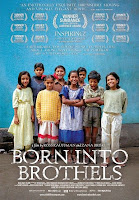 The other day, we watched a snippet from “Born into Brothels’. We agreed it’s film-makers probably profited in some way or another, but at the end of the day there was not one person who accused it of encouraging inner-city depravation as we suspect Gangsta rap does.
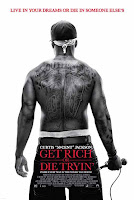
Put that next to 'Get Rich or Die Tryin'; another film depicting inner city life loosely based on rapper 50 Cent’s gangland reality and violent experiences and you hear outrage.

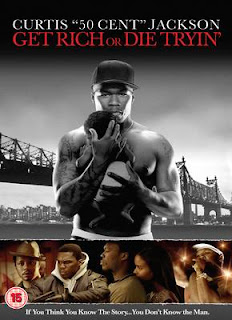
To begin with, its movie poster shows 50 Cent (real name Curtis Jackson) with his arms outstretched, a microphone in one hand and a gun in the other. The poster was later ammended to calm criticism:
Later on, the DVD box looked like this:
 If you listen to it, you’ll know it is populated with expletives, drug dealers turned emcees, the size of fly bling, rims, and booty in the strip club. The music seems to perpetuate a lifestyle denigrating women, homosexuals, whilst all the while advocating violence and self-destruction in pursuit of the almighty dollar bill.
 Although, Snoop Dogg (and others) made a living from it since the 1980’s, it’s popularity really became commercially evident in the 1990’s, with the release of Dr. Dre's album, 'The Chronic' in 1992.
Criticism has come from both right wing and left wing commentators, religious leaders and black activists alike. In August 2006, civil rights activist -- the Rev. Al Sharpton warned of the dangers of doing nothing about the glorification of the gangster lifestyle.
Many people strongly believe, that Gangsta rap fosters criminal behavior amongst our ‘impressionable’ youth. Many have tried to quantify this tangible effect and though there have been varying results -- the majority lean with the argument that music (more so than television) has an effect on social behavior. (David Gordon, 2006)
There are many ethical issues at stake here. For instance, many Gangsta rappers often defend themselves by claiming they are only describing their reality of inner-city life, which leads me to question how they can justify making such vast amounts of personal profit from this exploitation. To what measure is it ethical and acceptable to profit from the plight of poor black conditions? The quandary deepens should it be proven that this behavior also inspires new and more illicit activity as well.

The rivalries between East and West Coast rap artists have led to countless deaths already. Two high profile rappers 2Pac Shakur and Biggie Smalls have already succumbed to their end in high profile drive by shootings. Record companies capitalized on the glorification of gang violence in rap music. These are people who can’t even defend themselves with the argument they are ‘describing the reality of their lives’.
 The other day, we watched a snippet from “Born into Brothels’. We agreed it’s film-makers probably profited in some way or another, but at the end of the day there was not one person who accused it of encouraging inner-city depravation as we suspect Gangsta rap does.
Put that next to 'Get Rich or Die Tryin'; another film depicting inner city life loosely based on rapper 50 Cent’s gangland reality and violent experiences and you hear outrage.

To begin with, its movie poster shows 50 Cent (real name Curtis Jackson) with his arms outstretched, a microphone in one hand and a gun in the other. The poster was later ammended to calm criticism:

Later on, the DVD box looked like this:

Nevertheless, Jim Sheridan, who directed the film is an aclaimed director of ‘My Left Foot’ fame. Surely, he felt the project was worthwile. 
 It is a new perspective on Gangsta rap. In the movie, Marcus is given the opportunity and could use violence against those who want to mortally harm him, but instead opts for a more dangerous road; one that inolves using lyrics as verbal bullets to humiliate his foes. He famously walks on stage with a bullet proof vest. He's saying that if you live in the same conditions as he did, then you have braver more nobel means than violence at your disposal. It is the gangland's alternative to 'Kids with Camera's' solution.
In one scene, 50 Cent is shot nine times. He was shot nine times in real life too. Some say his album by the same name, ‘Get Rich or Die Tryin’, reveals the emotion that makes 50 Cent a powerful musical artist. The album was a huge commercial success, making him one our richest rappers!

___________________________________________________
www.wl.k12.in.us/hs/clubs/scarlette/ jan27-06%5Cpage3Scarlette012706.pdf
Gordon, D. W. (2006, Nov) The Effect of Gangsta-Rap Radio on Urban Homicide Paper presented at the annual meeting of the American Society of Criminology (ASC), Los Angeles Convention Center, Los Angeles, CA
Film: Get Rich or Die Tryin’ (2005)
Proof, BBQs, & Contacts, oh my!
As further proof that little eight-pound six-ounce baby jesus loves my final paper, the 400th episode of The Simpsons was based around the ramifications of an FCC over-reaction to an indecency complaint. Unlike the last eight years or so of The Simpsons, the 400th episode was actually kind of funny.
If any of you are so inclined to make it down to Menlo Park this next Saturday, Maggie and I are having a BBQ. Here's the info
If any of you are so inclined to make it down to Menlo Park this next Saturday, Maggie and I are having a BBQ. Here's the info
| Location: | 445 Encinal Ave, Apt. N, Menlo Park, CA View Map |
| When: | Saturday, May 26, 6:30pm |
| Phone: | 650-324-2953 |
| | |
| Mat's Graduating! Join us for a celebratory BBQ before Mat heads to LA! 6:30-whenever! We'll have the hamburgers, hot dogs and some side dishes. It would be rad if you can bring beer (or other beverage of your choice), a side dish, or dessert. If you're intrested in dropping by just let me know so we can make sure we have enough grub for everyone. Lastly, if you guys are in L.A. in the future drop me a line. My permanent phone number is 917-940-2348 and matthewpatrick@gmail.com is the best way to get a hold of me. It's been swell, y'all. Matthew | |


Subscribe to:
Posts (Atom)
